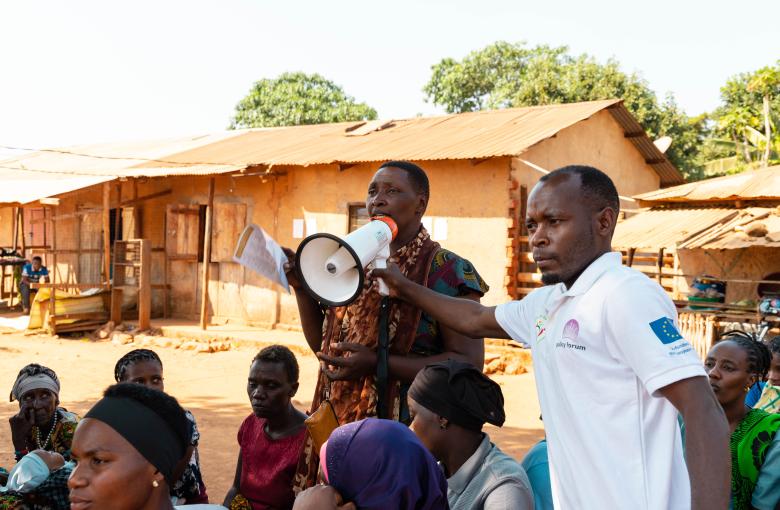
  • An image of the dialogue
    When Citizens Ask, Leadership Must Respond: Lessons from the Raia Makini Community Dialogues

    Across villages in Mpimbwe, Bahi and Mpwapwa, a series of community dialogues under the Raia Makini Project has opened a space where citizens can ask questions, raise concerns and engage directly with local leadership about issues that shape their daily lives.

  • IMAGE IS AI GENERATED
    Transforming Education Outcomes Through Social Accountability and Student Attendance Monitoring

    Disclaimer: To protect the individual's privacy, a pseudonym has been used in this text.

    A Story of Intervention, Protection, and Community Responsibility

  • RYC Ruangwa Hashim Ramadhani Mtela
    From Community Voices to Classrooms: How Youth Advocacy Helped Strengthen Science Education at Nambawala Secondary School

    From Community Voices to Classrooms: How Youth Advocacy Helped Strengthen Science Education at Nambawala Secondary School For students to succeed, they need more than classrooms and learning materials. They need qualified teachers who can guide them, explain complex concepts, encourage their curiosity, and provide the support they need throughout their learning journey. At Nambawala Secondary School, located in Mbekenyera Ward, Ruangwa District, a shortage of science teachers had become a significant challenge affecting the school's ability to provide effective teaching and learning.

  • Image is AI Generated.
    When Communities Step In: Masumbwe Village Funds Desks for Local Schools

    MBOGWE DISTRICT- In many rural communities across Tanzania, the promise of free education continues to collide with a difficult reality. When schools lack basic infrastructure, it is families and communities who step in to fill the gap. In Masumbwe Ward, Mbogwe District, one of the most visible challenges facing students at Masumbwe and Muungano Primary Schools was the severe shortage of desks. For years, children attended classes without proper seating, forced to sit on dusty classroom floors. This issue not only affected their comfort, but also their ability to learn effectively.

  • Image is AI generated
    THE EDUCATION DATA NO ONE COLLECTS: WHY WE DO NOT KNOW HOW MANY RURAL STUDENTS ACTUALLY LEARN

    How information system failures in rural Tanzania create data gaps that make educational planning and accountability more challenging MBEYA DISTRICT - Ask any education official how many students are enrolled in rural primary schools, and you will get precise numbers within minutes. Ask how many of those students are actually learning, progressing, or likely to complete their education, and you will encounter a more complex answer.